Following the thread
How I
arrived here.
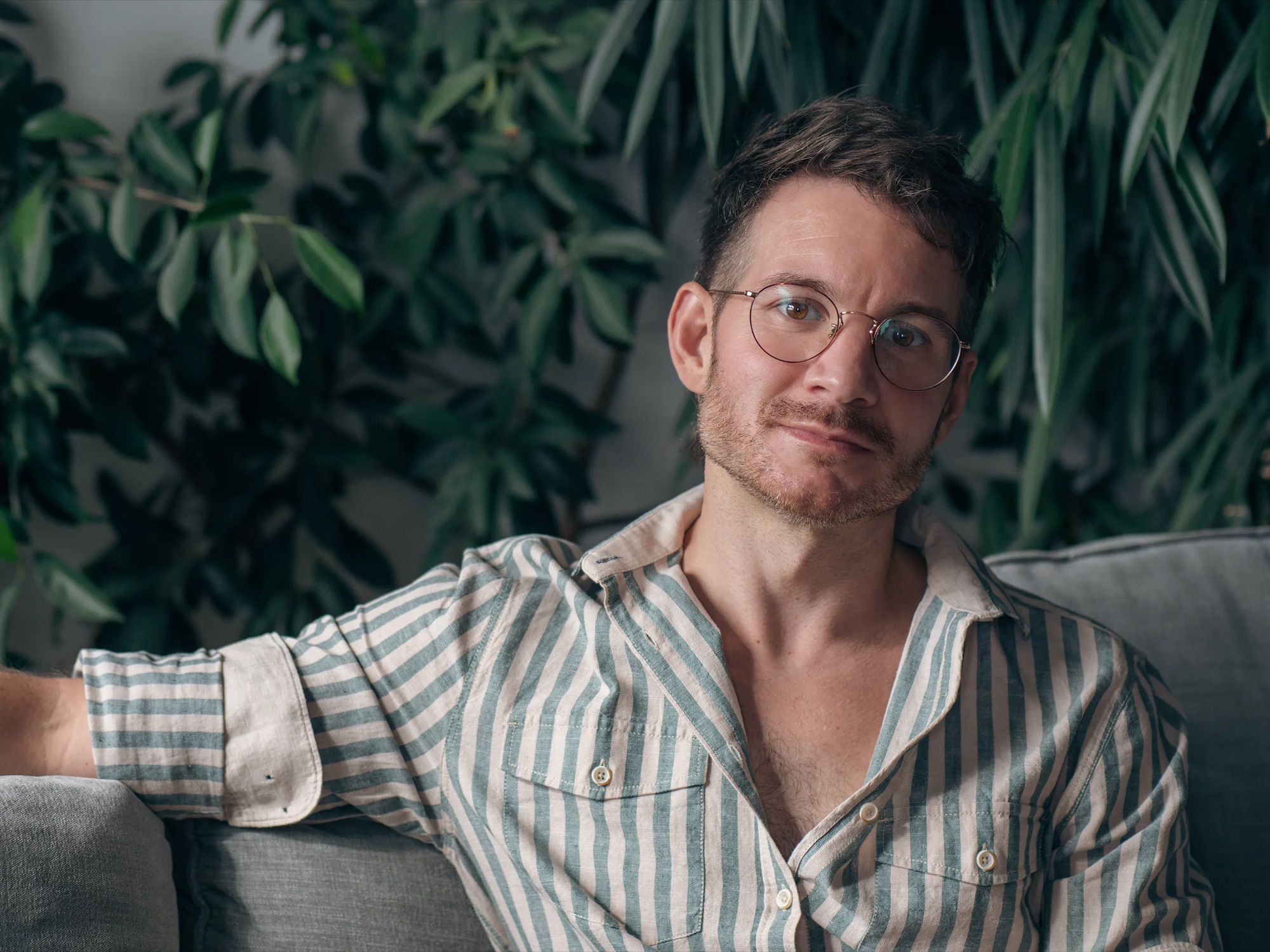
For a long time, my work looked like a series of changes. Only later did I understand that I had been following the same question all along.
For a long time, my work looked like a series of changes: music, research, production, design, video, digital systems. Only much later did I understand that I had been following the same question all along: how does something internal - an idea, a feeling, a complex system - become perceptible to someone else?
I studied MultiMediaArt in Salzburg with a focus on audio and music production. But even then, I was less interested in music as an isolated object than in what it does to us. I wanted to understand how sound affects the body, perception and emotion - biologically as well as psychologically.
That curiosity led me into interdisciplinary music-medicine research. At the Mozarteum Salzburg, I worked with the Mensch und Musik project, where music met physics, chronobiology, medicine, mathematics and musicology. I helped design and conduct research into the use of music for cardiovascular conditions, and later developed a multifactorial model of musical effect for my master's thesis. I continued in Vienna with doctoral studies in musicology and worked on a clinical study with 300 participants at Hanusch Hospital, investigating the role of music therapy in depression.
After two years, I realised that the academic world was not where I wanted to stay. I was interested in understanding systems, but I also needed to make things - to bring ideas into contact with people and the real world.
I became self-employed in 2008. At first, most of my work was in music production: scores and sound for television formats, playbacks for touring shows, and recordings with artists. It taught me a great deal about collaboration, deadlines and the distance between an idea and the form that finally reaches an audience. It also showed me that music was too intimate for me to treat as an endless commercial resource. I stepped away before that relationship was damaged beyond repair.
My work gradually expanded into graphic design, books, posters, video, digital content and online platforms. Covid accelerated that shift, but it did not create it. I had always been interested in more than one medium. The medium was simply the material available for the problem in front of me.
I did not need to become easier to categorise.
More recently, burnout forced a much deeper pause. It was not a quick or pleasant one, but it became a necessary turning point. I began to understand that I did not have to keep fitting myself into categories other people already understood. I did not have to become the version of a designer, musician or professional that seemed easiest to explain. In fact, the qualities people valued most were often the ones I had treated as difficult to categorise: seeing connections, sensing what a project was really trying to become, and helping someone find clarity without stripping away its character.
Looking back, the thread now seems obvious. I was never moving from music to research to design as separate careers. I was learning different ways to enter complexity, recognise its internal structure, and translate it into something that could be felt and understood.
That is where my work sits today. Not inside one medium, but in the space between perception and form - helping people realise a vision, make sense of its moving parts, and build the system through which it can meet the world.
Music as effect
Where it started - not music as an object, but what sound does to the body, perception and emotion.
Systems beneath form
Looking for the structure under a thing - the logic that lets it hold together and be understood.
Ideas meeting the world
Carrying something internal across into a form other people can actually feel.
The medium changes. The work underneath it stays the same.
Tell me what you're working on →